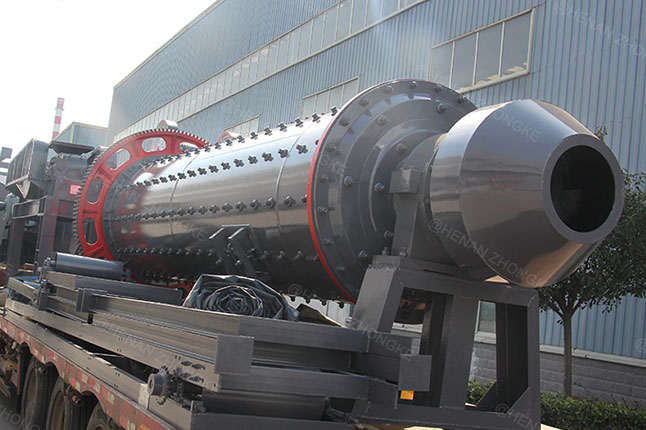
The optimal ball-to-material ratio in a ball mill typically falls within the range of 4:1 to 6:1 by volume, or 25% to 40% of the mill's volume filled by grinding media. However, the ideal ratio is not a single magic number but depends heavily on the material being ground, the mill's operation, and the desired final particle size.
If you're involved in manufacturing, mining, or research, you know the ball mill is the workhorse of size reduction. But its efficiency isn't automatic. One of the most critical—and often debated—factors for achieving a perfect grind is the ball-to-material ratio. Getting this right means higher productivity, lower energy costs, and a superior product. Getting it wrong leads to wasted time, money, and resources.
This comprehensive guide will break down everything you need to know about finding the optimal ball-to-material ratio for your specific process.
Why the Ball-to-Material Ratio is So Important
The ratio of grinding media (balls) to the material charge is the heart of the milling process. It directly controls two key mechanisms:
Impact: When balls fall onto the material from the top of the rotating mill, they fracture particles through high-energy collisions.
Abrasion: As the balls rub against each other and the mill liner, they grind particles through friction and shear forces.
An incorrect ratio disrupts this balance:
Too many balls (Ratio too high): Leads to excessive energy consumption, increased wear on the mill liner and balls themselves, and can cause over-grinding. The overcrowded balls cushion each other's impacts, reducing efficiency.
Too few balls (Ratio too low): Results in under-grinding. There aren't enough impacts or shearing actions to effectively reduce the particle size, leading to longer milling times and an inconsistent final product.
The Standard Rule of Thumb: A Starting Point
The longstanding rule of thumb for a ball mill's grinding media charge is to fill the mill to approximately 30-35% of its internal volume with balls. The material to be ground (the "charge") should fill the voids between the balls, plus a bit more, bringing the total mill volume filled to about 50-60%.
This translates to a ball-to-material volume ratio of roughly 2:1 to 3:1. However, this is a generalization. A more practical and common way to express this is by the weight of the balls to the weight of the material.
Common Ball-to-Material Ratio Ranges by Application
| Application | Typical Ratio (Balls : Material by Weight) | Key Consideration |
|---|---|---|
| General Fine Grinding | 4:1 to 6:1 | A safe and efficient starting point for many materials. |
| Coarse Grinding | 3:1 to 4:1 | Favors impact over abrasion for initial size reduction. |
| Ultra-Fine Grinding | 6:1 to 10:1+ | Requires more media for the increased number of contacts needed. |
| Wet Milling | Often lower than dry milling | The liquid aids in particle transport and can reduce the needed media. |
| Dry Milling | Often higher than wet milling | Requires more media to achieve the same level of particle interaction. |
Key Factors That Influence the Optimal Ratio
Finding your "golden ratio" requires experimenting with these variables:
1. Material Properties
Hardness: Harder materials require a higher ratio (more balls) to achieve effective fracture.
Feed Size: Larger starting particles need a higher impact force, often achieved with a higher ratio of larger-sized balls.
Density: Denser materials may require adjustments to ensure proper cascading and grinding action.
Target Fineness: A finer end-product requires longer milling and often a higher ball ratio to increase the number of grinding events.
2. Mill Operational Parameters
Mill Speed: The mill's rotation speed is a percentage of its "critical speed" (the speed where centrifugal force pins the balls to the shell). Most mills run at 65-75% of critical speed. The optimal ratio can shift with speed.
Wet vs. Dry Milling: Wet milling often uses a slightly lower ratio as the slurry helps in mixing and transporting ground particles, preventing them from cushioning impacts.
Mill Liner Type: The liner's profile affects how the balls are lifted and dropped, influencing the optimal charge volume.
3. Grinding Media Characteristics
Ball Size: A mix of different ball sizes is often optimal. Larger balls break down coarse particles, while smaller balls fill the voids and provide the fine grinding. The ratio might need adjustment if you change your media size distribution.
Ball Density: Steel balls are denser than ceramic balls. A lower volume of steel media may be needed compared to ceramic to achieve the same mass and grinding energy.
How to Find Your Optimal Ratio: A Step-by-Step Approach
Start with the Standard: Begin with a 4:1 or 5:1 ball-to-material ratio by weight and a 30-35% media fill level.
Run a Test Mill: Run the mill for a predetermined time.
Analyze the Output: Sieve the product to analyze the particle size distribution.
Adjust and Iterate:
If the grind is too coarse, increase the ratio (add more media) or use larger media, and run again.
If you see excessive wear or the product is too fine (over-grinding), slightly decrease the ratio.
Document Everything: Keep precise records of ratios, milling time, feed size, output size, and energy consumption. The optimal ratio is the one that achieves your target particle size in the shortest time with the least energy.
Conclusion: Optimization is a Process, Not a Prescription
There is no universal optimal ball-to-material ratio. While a 4:1 to 6:1 ratio by weight is an excellent starting point for most applications, the true "optimal" ratio is a finely tuned variable unique to your operation.
The most successful milling processes are those that treat the ball-to-material ratio as a key lever for efficiency. By understanding the principles behind it and committing to systematic testing, you can unlock significant savings in energy and time while consistently producing a higher quality product. Start with the rules of thumb, but always let your specific results and material science guide you to your own perfect ratio.
Ready to optimize your process? Always remember to consult your mill manufacturer's guidelines and prioritize safety when loading and maintaining your equipment.
Meta Description: Discover the optimal ball-to-material ratio for your ball mill. Our guide explains why the standard 4:1 to 6:1 ratio is a starting point and how to find your perfect setting for maximum efficiency and product quality.