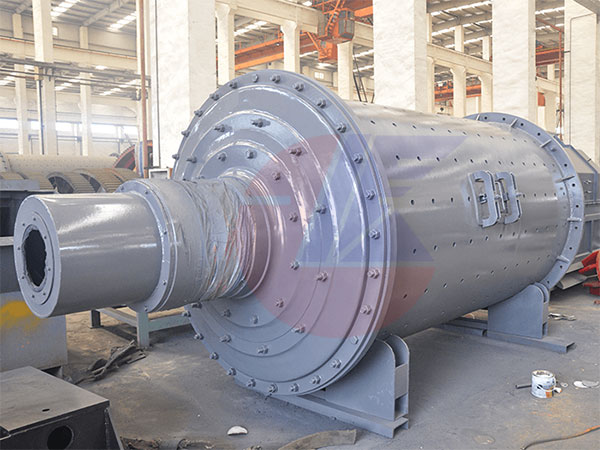
Wondering if a ball mill can grind limestone? The answer is a resounding yes. Discover how ball mills efficiently grind limestone into fine powder for various industries, the process involved, and key considerations for optimal results.
Introduction
Limestone is a fundamental raw material, serving as the backbone for industries ranging from construction and agriculture to manufacturing. However, its usefulness often depends on being ground into a fine powder. A common question among plant managers, engineers, and industry newcomers is: Can a ball mill effectively grind limestone into fine powder?
The short answer is yes, a ball mill is an excellent and highly efficient piece of equipment for grinding limestone into fine powder. In fact, it is one of the most widely used methods in industries like cement production, flue gas desulfurization, and soil amendment.
This article will delve into the specifics of how a ball mill accomplishes this task, the ideal conditions for grinding limestone, and the resulting powder's applications.
How a Ball Mill Grinds Limestone: The Process Explained
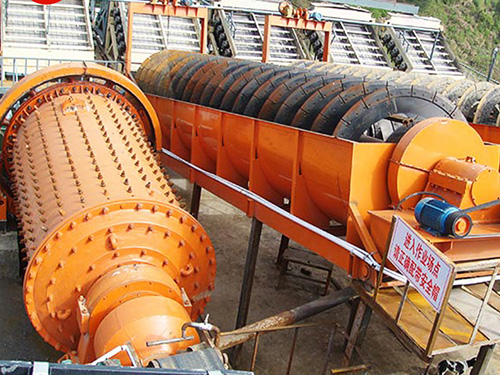
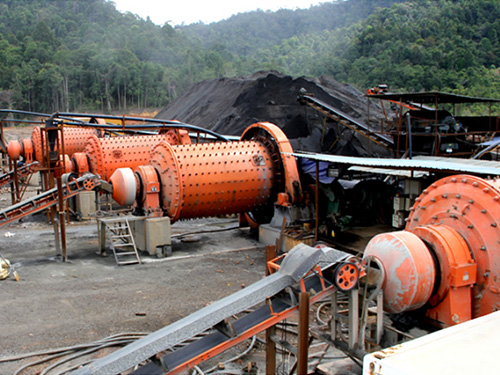
A ball mill operates on a simple yet effective principle: impact and attrition. It consists of a rotating cylindrical shell partially filled with grinding media, typically high-chromium steel balls.
Loading: Crushed limestone (usually to a manageable size of less than 1 inch) is fed into the mill's inlet.
Rotation: As the cylinder rotates, the balls are lifted along the inner walls until gravity causes them to cascade down onto the limestone below.
Grinding Action: The tumbling balls impact the limestone chunks, breaking them through impact forces. Simultaneously, the sliding and rolling of the balls against the material and the mill's liner causes attrition, or abrasion, which further reduces the particle size.
Classification and Output: The continuous grinding action reduces the limestone to a fine powder. The powder exits through a discharge grate, which retains the grinding balls but allows the finely ground material to pass through.
For an even finer and more controlled product, the discharged material is often passed through an air classifier or a separator. This device returns oversized particles to the mill for further grinding, ensuring a consistent and precise final particle size.
Key Advantages of Using a Ball Mill for Limestone
Why is the ball mill the go-to choice for limestone grinding?
Versatility in Fineness: Ball mills can produce a wide range of product fineness, from coarse powders (like agricultural lime) to ultra-fine powders (for fillers in plastics or paints).
High Capacity: Industrial ball mills are designed for large-scale, continuous operation, making them ideal for high-tonnage applications like cement raw meal preparation.
Reliability and Simplicity: The design of a ball mill is robust and well-understood, leading to high operational reliability and relatively straightforward maintenance.
Wet or Dry Grinding: Ball mills can handle both dry grinding (common for most applications) and wet grinding (slurry), offering flexibility based on the end-use of the limestone powder.
Optimal Conditions for Grinding Limestone in a Ball Mill
To achieve maximum efficiency and the desired product quality, several factors must be optimized:
Grinding Media: The size, density, and material of the balls are crucial. Smaller balls are better for fine grinding, while larger balls are effective for breaking down larger chunks.
Mill Speed: The rotational speed is typically maintained at 65% to 75% of the "critical speed" (the speed at which the balls centrifuge). This ensures the balls cascade effectively for optimal impact.
Feed Size: A consistent and appropriately sized feed (e.g., ¼” to 1”) is essential to prevent overloading and ensure efficient grinding.
Moisture Content: For dry grinding, the limestone must have low moisture content (typically below 1-2%) to prevent clogging and coating of the balls and mill liners.
Applications of Ball-Milled Limestone Powder
The fine limestone powder produced by a ball mill is indispensable for numerous products and processes:
Cement Manufacturing: Limestone is the primary raw material for clinker production. It is ground with other materials like clay and sand to create "raw meal."
Flue Gas Desulfurization (FGD): Powdered limestone is used in scrubbers at power plants to remove sulfur dioxide (SO₂) from exhaust flue gases, reducing acid rain.
Agriculture (AgLime): Ground limestone is spread on fields to neutralize soil acidity and provide calcium for crops.
Fillers and Extenders: Ultra-fine limestone is used as a filler in products like plastics, paints, paper, and asphalt to improve properties and reduce costs.
Animal Feed: It is added as a calcium supplement to livestock feed.
Conclusion
So, can a ball mill grind limestone into fine powder? Absolutely. The ball mill is not just capable; it is a proven, efficient, and scalable solution for transforming coarse limestone into a valuable fine powder tailored for specific industrial needs. Its combination of impact and attrition grinding makes it uniquely suited for this purpose, offering control over particle size and high throughput.
Whether you are setting up a new processing plant or optimizing an existing one, understanding the synergy between limestone and ball mill technology is key to achieving your production and quality goals.
Ready to explore ball mill options for your limestone grinding operation? Contact a reputable supplier to discuss your specific capacity and fineness requirements.